
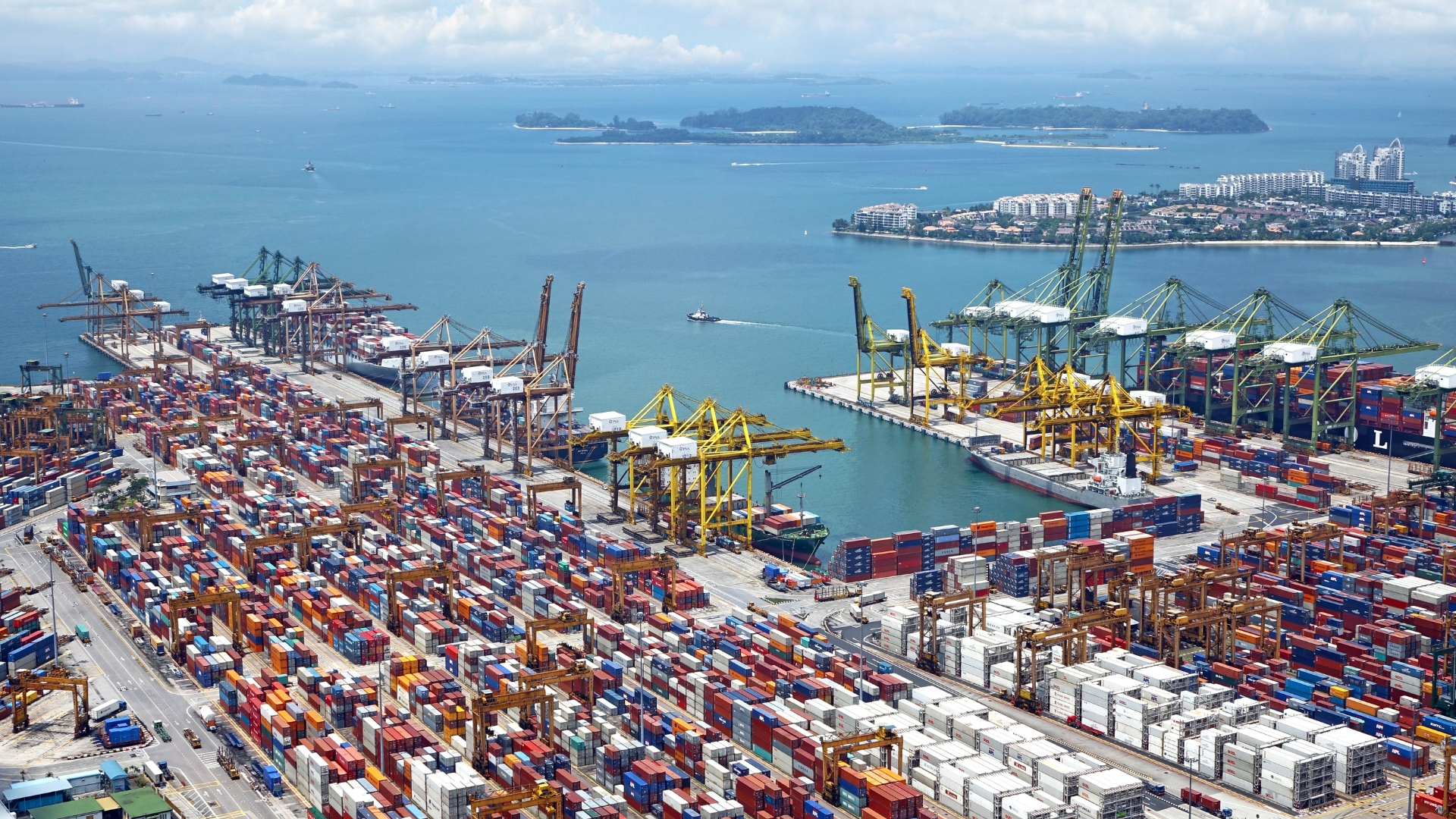
1. Why Foreign Buyers Should Prefer Named-Terminal FOB Over EXW in Vietnam
Under Incoterms® 2020, buying EXW (Ex Works) makes the foreign buyer responsible for export customs clearance (Tờ khai hải quan xuất khẩu). Under Vietnamese customs rules, however, a foreign company without a local Vietnamese legal entity, 10-digit Tax ID (MST), and corporate digital signature token (Chứng thư số) cannot file directly as Exporter of Record.
As a result, an EXW buyer's forwarder must pay third-party export declaration and origin handling fees that often exceed standard FOB costs. International buyers generally achieve cleaner cost control by contracting on FOB [Named Port Terminal] while requesting an itemized breakdown of the factory's EXW price plus inland trucking and Terminal Handling Charges (THC).
2. Southern Vietnam: Cat Lai River Port vs. Cai Mep–Thi Vai Deep-Water Complex
Cat Lai Terminal (Ho Chi Minh City): Vietnam's largest single container terminal (9.1 million TEU/year, ranked #22 globally) sits on the Đồng Nai River inside urban HCMC. Constrained by river draft (~3,000 TEU max vessel size) and HCMC daytime heavy-truck bans (giờ cấm tải), Cat Lai is ideal for intra-Asia trade lanes (China, Japan, Korea, ASEAN) and LCL consolidation.
Cai Mep–Thi Vai Deep-Water Port (Bà Rịa–Vũng Tàu, 67km SE of HCMC): Offering -14m to -16m channel draft capable of berthing 18,000 to 24,000 TEU ultra-large container vessels (ULCVs), Cai Mep provides direct mainline strings to the US West/East Coasts and Northern Europe. Containers from Bình Dương or Đồng Nai factories move via 24–36 hour inland ICD river barges (from ICD Phuoc Long / Tan Cang) or direct highway drayage, avoiding 4–6 days of Singapore transshipment delay.
3. Northern Vietnam: Dinh Vu / Cam River (-8m) vs. TC-HICT Lach Huyen (-14m)
In Northern Vietnam, traditional Dinh Vu and Cam River terminals in inner Hải Phòng are restricted to -8m to -10m draft (1,000–2,500 TEU feeders), forcing 60% of US/EU cargo to transship via Singapore, Hong Kong, or Kaohsiung at an added cost of US$80 to US$120 per TEU and +3 to 5 days transit time. Conversely, TC-HICT Lach Huyen Deep-Water Terminal (-14m draft, exceeding 2.0M TEU at Berths 1–4) berths 18,000 TEU New Panamax mother vessels directly, connected via the Tân Vũ–Lạch Huyện sea bridge to Bắc Ninh and Hải Phòng industrial parks. (Buyers should also factor in the 2026 Ministry of Transport 10%–15% deep-water THC adjustment when modeling landed costs).
4. Key Specifications & Summary Table
| Port Terminal Cluster | Channel Draft & Max Vessel | Primary Service Profile | Inland Trucking & Barge Options | Best Commercial Fit |
|---|---|---|---|---|
| Cat Lai Terminal (HCMC — South) | River Draft | Max ~3,000 TEU | 9.1M TEU/yr; Intra-Asia Feeders | Direct truck (subject to HCMC truck-ban hours) | Intra-Asia FCL (JP/KR/CN/ASEAN) & LCL |
| Cai Mep–Thi Vai (BR-VT — South) | -14m to -16m | 18,000–24,000 TEU | Direct US & Europe Mother Vessels | 24–36h ICD River Barge or BR-VT Highway | Long-Haul US & EU FCL (Zero Transshipment) |
| Dinh Vu / Cam River (Hai Phong) | -8m to -10m | 1,000–2,500 TEU | Inner River; +$80–$120/TEU Feeder | Short truck from inner Hai Phong / Hai Duong | Short-Sea Asian Lanes & Heavy Bulk Feeders |
| TC-HICT Lach Huyen (Hai Phong) | -14m Deep-Sea | Up to 18,000 TEU | 2.0M+ TEU; Direct US/EU Strings | Tan Vu–Lach Huyen Sea Bridge from Bac Ninh | US/EU Electronics, CNC & Time-Critical FCL |
5. Frequently Asked Questions
Q1. Should an importer book FOB Cat Lai or FOB Cai Mep when shipping from Southern Vietnam to the US or Europe?
For full-container-load (FCL) shipments bound for the US or Europe, booking FOB Cai Mep–Thi Vai (deep-water terminal) is generally superior: your container loads directly onto an 18,000–24,000 TEU mother vessel (often barged seamlessly from HCMC/Bình Dương ICDs), saving 4 to 6 days of transit time and eliminating Singapore feeder transshipment rollovers.
Q2. What is the cost and transit time difference between Hai Phong Dinh Vu port and Lach Huyen deep-water terminal?
Dinh Vu river terminals (-8m to -10m draft) can only accommodate 1,000–2,500 TEU feeder vessels, adding 3 to 5 days of transit time and US$80 to US$120 per TEU in Singapore or Hong Kong transshipment costs for US/EU cargo. TC-HICT Lach Huyen (-14m draft) berths up to 18,000 TEU New Panamax mother vessels directly.
Q3. Why is buying EXW from a Vietnamese factory often more expensive than FOB?
Under Incoterms 2020, EXW makes the foreign buyer responsible for Vietnam export customs clearance. Because a foreign company without a local Vietnamese entity and 10-digit Mã số thuế cannot file an export declaration directly on Vietnam's National Single Window, the buyer's forwarder must pay extra third-party export agency and local handling charges.