
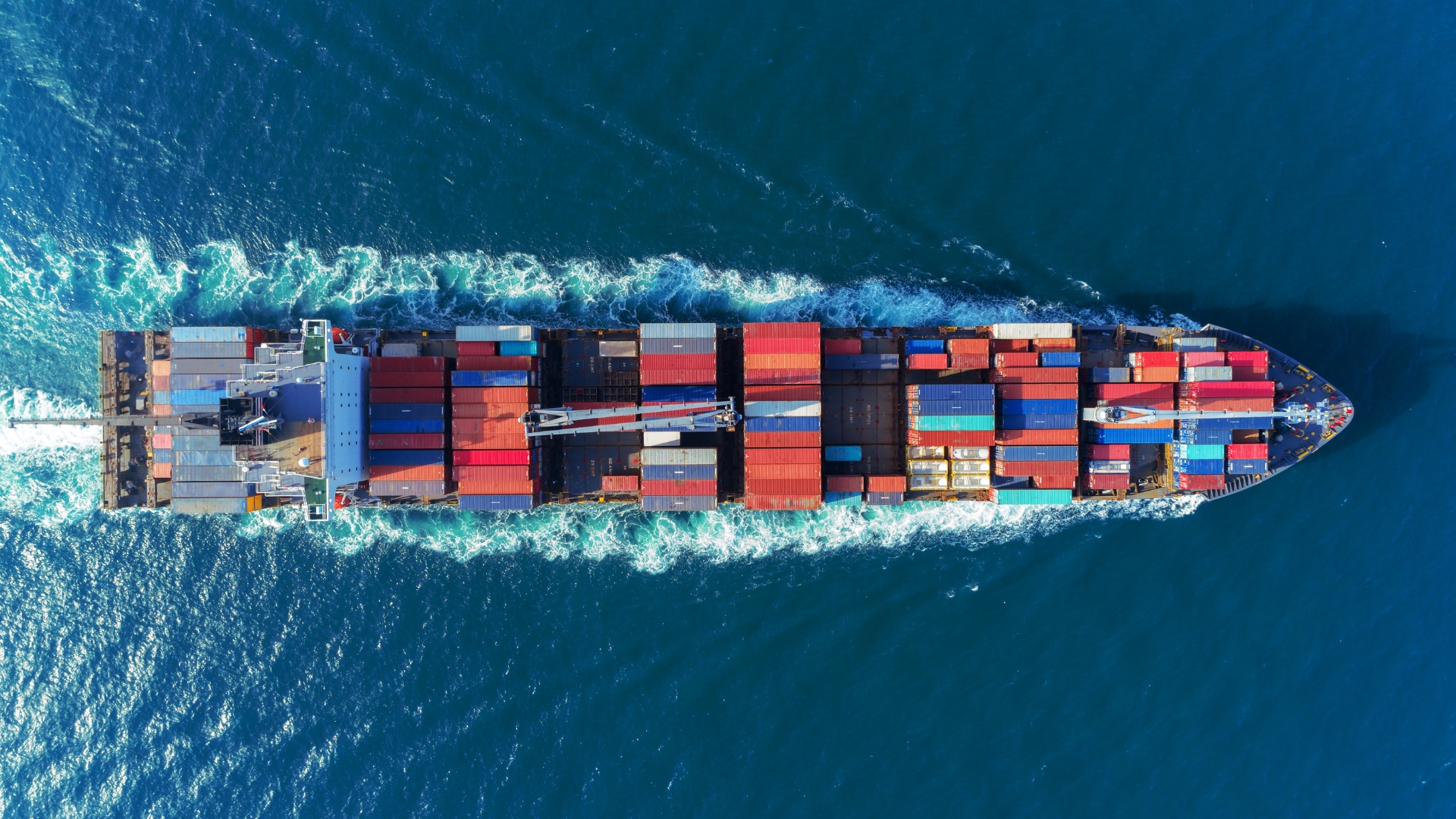
1. Container Weight vs. Volume Limits: 20' FCL Heavy Cargo vs. 40'HC Light Cargo
Ocean freight impact per unit varies dramatically depending on whether a product 'weighs out' (hits road and vessel payload limits in a 20' FCL long before filling cubic volume) or 'cubes out' (fills a 40' High-Cube container at low weight):
• Heavy Weight-Limited Cargo (20' FCL ~25.0–27.5 MT): Vietnamese porcelain/ceramic tiles (HS 6907, where leading producers ship 4,000+ TEU meeting ANSI/ISO 13006), natural stone slabs, steel coils, and CaCO3 masterbatch max out road axle limits at ~25 Metric Tons inside a 20' FCL while leaving 40% of the container empty.
• Medium-Density Agro Cargo (20' FCL ~15.88–21.6 MT): Raw cashew kernels (700 cartons = 15.876 MT per 20' FCL) and green coffee beans (19.2–21.6 MT per 20' FCL).
• Volumetric Light Cargo (40'HC ~8–12 MT): Cut-and-sew garments (where Vietnamese unit labor averages $2.50–$3.80 vs. $4.50+ in coastal China), footwear, and assembled rattan/wood furniture fill 68 CBM before reaching 12 MT.
2. Modeling Destination Tariffs, Trade Remedies & EU CBAM Carbon Costs
Tariff schedules on cross-border manufacturing require careful HTS-level modeling prior to issuing purchase orders. US importers must calculate base MFN duty rates alongside applicable trade-remedy tariffs and AD/CVD scope rules, supported by clear substantial transformation production records.
For European importers of Vietnamese iron, steel, aluminum, fasteners, and cement/clinker, Total Landed Cost calculations also incorporate EU Carbon Border Adjustment Mechanism (CBAM) reporting of installation-level Scope 1 and Scope 2 embedded emissions.
3. Avoiding the Double-Duty Cost of Bundled Trading Markups
When an intermediary trading company embeds an undisclosed 15% margin into your FOB unit price on a US$200,000 purchase order (invoicing US$230,000 instead of the factory's US$200,000 FOB price), costs compound in two ways: first, you pay an extra US$30,000 on the goods; second, if your destination import tariff is 20%, you pay an additional US$6,000 in customs duty on the trader's embedded spread. Contracting directly with the manufacturer at factory-gate FOB prices while billing any sourcing or inspection advisory services separately keeps your customs valuation clean and accurate.
4. Key Specifications & Summary Table
| Product Category | Typical Container & Payload | Primary Landed-Cost Driver | Direct Sourcing Optimization |
|---|---|---|---|
| Porcelain Tiles, Stone & Steel | 20' FCL Heavy (24.0–27.0 MT) | Weight-per-MT freight + destination duty | Direct mill FOB + deep-water port routing |
| Cashew Kernels (W240 / W320) | 20' FCL (15.88 MT) / 40' (25 MT) | FOB kernel price + AFI grade yield | Direct processor contract + pre-shipment count QC |
| Green Coffee (Robusta / Arabica) | 20' FCL Bulk Liner (19.2–21.6 MT) | Terminal differential + EUDR traceability | Origin wet/dry mill contracting + plot GeoJSON |
| Garments, Footwear & Furniture | 40' High-Cube (68 CBM / 8–12 MT) | Cubic freight + FTA C/O (Form EUR.1) | Qualifying fabric cumulation + direct factory FOB |
5. Frequently Asked Questions
Q1. How do I calculate the true total landed cost of importing from Vietnam?
Add six cost components per unit: (1) Factory EXW/FOB price; (2) Vietnam inland trucking or barge drayage plus port Terminal Handling Charges; (3) Ocean freight and marine insurance (CIF value); (4) Destination customs duty (accounting for EVFTA/CPTPP relief, US trade remedies, or EU CBAM costs); (5) Destination port handling and delivery; and (6) Pre-shipment quality inspection fees.
Q2. What tariff factors should US importers check when sourcing manufactured goods from Vietnam?
Verify the exact 10-digit HTSUS classification, confirm substantial transformation inside the Vietnamese factory with clear production records, and check whether the product category (such as plywood, steel, or aluminum extrusions) is subject to specific anti-dumping, countervailing, or Section 301 rules.
Q3. Why does ocean freight wipe out factory price savings when sourcing heavy building materials from Vietnam?
Heavy building materials like ceramic tiles, natural stone, cement, and steel fasteners hit the 24–27 Metric Ton road and vessel payload limit inside a 20-foot container long before filling cubic capacity. You must divide total 20' FCL freight and port charges by the maximum legal metric tonnage—and route through deep-water terminals near the quarry or mill—before comparing unit landed cost.